“The Letters in the Barn”: Shirley Jackson Biographer Ruth Franklin Helps Uncover the “Secret History” of Women’s Lives
When Shirley Jackson’s story “The Lottery” appeared in the pages of The New Yorker in 1948, she baffled and horrified the magazine’s readers—many of whom thought the tale of villagers who participate in a ritual stoning might be based on reality.
“Utterly pointless,” “gruesome,” and “nasty,” complained some of The New Yorker’s readers, who sent more than 300 letters altogether—more than The New Yorker had ever received about a piece of fiction.
Unless you run in the literary circles obsessed with Jackson’s novels, like We Have Always Lived in the Castle or The Haunting of Hill House, your only experience with her writing might be an encounter with that unsettling, much-anthologized story in a high school English class.
For the rest of her career—and until her death in 1965—Jackson tried to out-write her reputation as the author of “The Lottery.” The story, most likely loosely based on her experiences living in the buttoned-up New England town of North Bennington, VT, would make her famous.
“It annoyed her to no end during her life that she was primarily known for ‘The Lottery’ and that that was the story that everybody always wanted to reprint, to the exclusion of so much of her other work,” explains Ruth Franklin, Shirley Jackson’s biographer and author of Shirley Jackson: A Rather Haunted Life, recently published by Liveright.
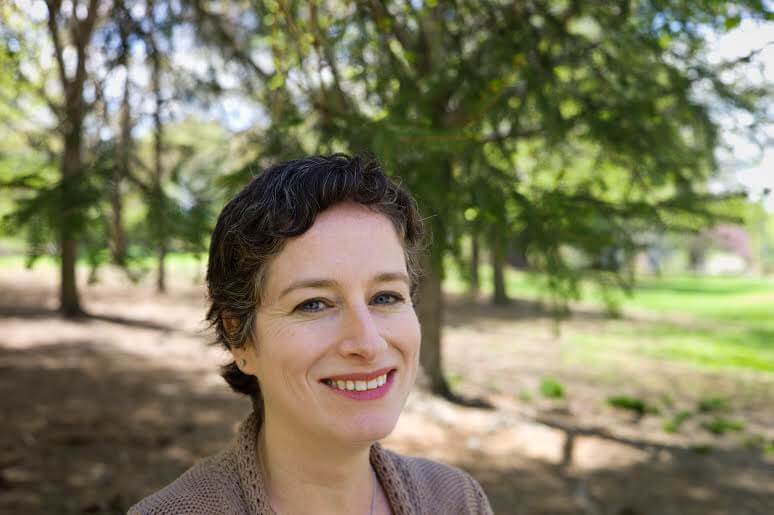
Franklin and I speak by phone one bright September morning, right before the release of her book—the first literary-critical biography of Jackson ever written. (There is one other biography from 1988, written by Judy Oppenheimer, says Franklin. But it’s “a very personal biography and doesn’t really go into the writing process, or into depth about Jackson’s writing and her life and as a book critic,” she adds. And Franklin is quick to point out there’s more archival material available now than when Oppenheimer penned Private Demons almost 30 years ago.)
When I ask how her morning is going, Franklin mentions she stayed up late to appear on “Darkness Radio,” a radio show about the paranormal, the night before. Given Jackson’s relationship to spooks, witches, and haunted houses, I wonder if this is a common request for Franklin to field.
“That’s definitely what she’s most known for,” says Franklin. “A general reader has probably read ‘The Lottery’ and might have read The Haunting of Hill House or seen one of the movies made of it.
“But I’m getting a lot of interest around the different aspects of her life, especially the combination of being a mother and a writer—that’s central to my book,” she explains.